


Are you struggling to balance your health and daily worries? Effective stress management is the missing link to achieving optimal diabetes control and better well-being.
Managing diabetes requires more than just monitoring food intake and medication. This comprehensive guide explores why stress management plays a vital role in your daily routine. You will learn actionable strategies, discover expert insights, and gain practical tools to lower anxiety, stabilize your glucose, and reclaim your health.
Understanding the Connection Between Your Mind and Glucose
Living with a chronic condition naturally brings unique emotional challenges. When you feel overwhelmed, your body reacts physically, which directly influences your blood sugar levels. Stress hormones like cortisol and adrenaline flood your system. These hormones trigger a fight-or-flight response, releasing stored energy into your bloodstream. For individuals without diabetes, this excess energy is easily absorbed. However, if you have diabetes, this process often leads to severe insulin resistance, causing a dangerous spike in your glucose readings.
Integrating reliable stress management into your daily routine is not a luxury; it is a medical necessity. Prolonged anxiety keeps your body in a constant state of alert. This chronic tension makes it incredibly difficult for prescribed medications and a healthy diet to do their jobs effectively. By prioritizing mental wellness, you are actively protecting your vascular system and organs from the long-term damage associated with uncontrolled diabetes.
Recognizing Diabetes Distress
Diabetes distress is a specific type of emotional burden tied directly to the relentless demands of condition care. You might feel frustrated by unpredictable glucose readings, worried about long-term complications, or exhausted by the constant need to calculate carbohydrates. Unlike generalized anxiety, this distress is deeply rooted in your daily medical routine.
Addressing this burden requires targeted stress management techniques that acknowledge the reality of your condition. Ignoring these feelings often leads to burnout, where individuals stop checking their glucose or taking their medication. Recognizing the signs of distress early allows you to seek help from your healthcare team and implement coping mechanisms before your health deteriorates.
Core Stress Management Techniques for Daily Life
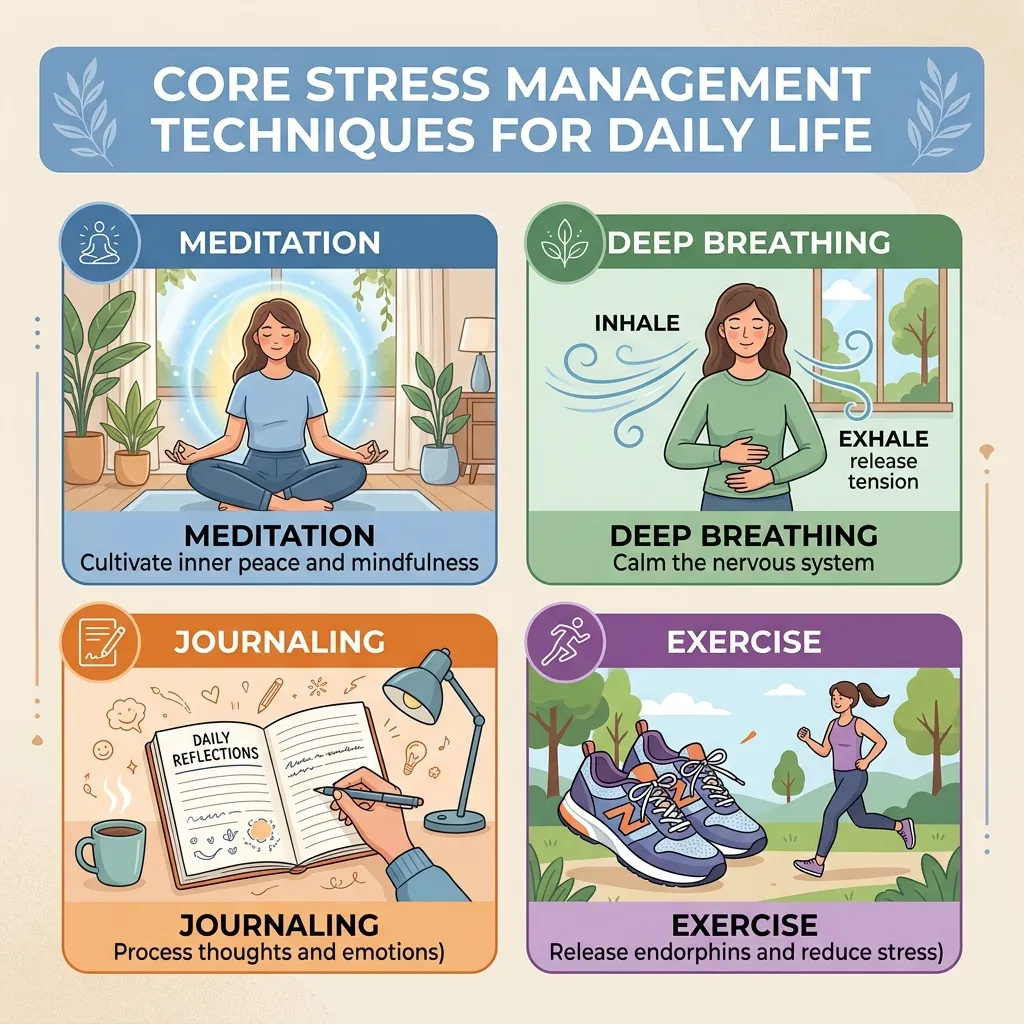 Creating a balanced lifestyle means finding practical ways to release tension every single day. The best stress management plan is one that you can stick to consistently, regardless of how busy your schedule becomes.
The Power of Physical Activity
Regular physical activity is one of the most effective ways to lower both cortisol and blood glucose. When you exercise, your muscles use sugar for energy, which naturally lowers the amount of sugar in your blood. Furthermore, movement stimulates the release of endorphins, your brain’s natural mood elevators.
You do not need to run a marathon to experience these benefits. A simple 20-minute walk after dinner can significantly blunt post-meal glucose spikes. Activities like swimming, cycling, and dancing are excellent options that also protect cardiovascular health. The goal is to find joy in movement, turning exercise into a sustainable stress management habit rather than an exhausting chore.
Embracing Mindfulness Practices
Mindfulness practices offer a powerful antidote to a racing mind. Techniques such as meditation, deep breathing exercises, and yoga teach you to anchor your awareness in the present moment. According to research from leading health institutions like Harvard Medical School, engaging in mindful meditation can actively lower hemoglobin A1C levels over time.
When you practice deep, diaphragmatic breathing, you activate the parasympathetic nervous system. This signals to your body that you are safe, halting the production of stress hormones. Dedicating just ten minutes each morning to guided imagery or mindful breathing establishes a foundation of calm that supports better diabetes control throughout the day.
Prioritizing Sleep Hygiene
Poor sleep is a massive physical stressor that wreaks havoc on your metabolism. Sleep deprivation increases cortisol production, drives insulin resistance, and elevates your appetite for sugary, high-carbohydrate foods. Implementing a rigorous sleep hygiene routine is a highly effective form of stress management.
Ensure your bedroom is cool, dark, and quiet. Limit screen time at least one hour before bed, as blue light disrupts melatonin production. Going to sleep and waking up at the same time every day regulates your circadian rhythm, making it easier for your body to process glucose efficiently.
Expert Insights on Emotional Wellness
 Top endocrinologists and mental health professionals emphasize that diabetes care must be holistic. You cannot separate the mind from the pancreas.
Experts suggest practicing “cognitive reframing.” When you see a high blood sugar number, rather than viewing it as a personal failure, reframe it as neutral data. It is simply a signal that an adjustment is needed in your medication, food, or activity level. This shift in perspective removes the guilt and shame that often fuel diabetes distress.
Another expert insight is the value of community. Joining a support group—whether local or online—connects you with peers who truly understand the daily grind of the condition. Sharing your frustrations and victories with others is a proven stress management strategy that reduces feelings of isolation.
Comparison Table: Effective vs. Ineffective Coping Mechanisms
|
Coping Strategy |
Type |
Impact on Diabetes Control |
Long-Term Health Outcome |
|---|---|---|---|
|
Mindful Meditation |
Effective |
Lowers cortisol, stabilizes glucose |
Improved mental clarity, lower A1C |
|
Emotional Eating |
Ineffective |
Spikes blood sugar, causes guilt |
Weight gain, severe insulin resistance |
|
Brisk Walking |
Effective |
Uses excess blood glucose |
Better cardiovascular health |
|
Isolation/Withdrawal |
Ineffective |
Increases depression and burnout |
Poor medication adherence |
|
Deep Breathing |
Effective |
Triggers relaxation response |
Reduced anxiety, lower blood pressure |
Common Mistakes to Avoid in Diabetes Care
Even with the best intentions, it is easy to fall into traps that exacerbate anxiety and sabotage your health goals. Awareness is the first step toward better choices.
First, avoid the mistake of perfectionism. Expecting flawless glucose readings every single day is unrealistic and sets you up for chronic frustration. Your blood sugar levels will fluctuate due to illness, hormones, and even the weather. Striving for progress rather than perfection is a vital stress management mindset.
Second, never skip your meals to “save” calories or correct a high reading without consulting your doctor. Skipping meals can lead to severe drops in glucose, triggering panic and a massive release of stress hormones. Consistent, balanced meals maintain metabolic harmony.
Finally, do not isolate yourself from your healthcare team. Many people hide their struggles because they fear being scolded by their doctor. Your medical team is there to help, not judge. Open communication ensures you get the right resources, including referrals to therapists who specialize in chronic illness.
Top Strategies for Immediate and Long-Term Relief
 To regain control over both your mind and your body, integrating scientifically backed routines into your daily schedule is non-negotiable.
Prioritize Purposeful Physical Activity
Movement is one of the most effective tools for immediate stress management. When you exercise, your muscles absorb glucose from the bloodstream without needing insulin, directly lowering your blood sugar. Additionally, physical activity releases endorphins, the brain’s natural mood elevators.
- Aerobic Exercise: Aim for 30 minutes of brisk walking, swimming, or cycling daily.
- Strength Training: Lifting weights or doing bodyweight exercises twice a week improves muscle mass, which enhances insulin sensitivity.
- Mind-Body Movements: Yoga and tai chi combine gentle movement with deep breathing, making them perfect dual-action techniques for stress management.
Optimize Sleep Hygiene
Poor sleep is a massive physical stressor. Sleep deprivation spikes morning cortisol levels and decreases your body’s sensitivity to insulin. To support your stress management efforts, prioritize seven to nine hours of quality sleep per night.
- Keep your bedroom cool and dark.
- Avoid caffeine and heavy meals within three hours of bedtime.
- Establish a digital sunset by turning off screens an hour before sleeping.
- Maintain consistent sleep and wake times, even on weekends.
Building Your Personalized Action Plan
To truly master stress management, you need a personalized plan that fits your unique lifestyle. Start small. Choose one physical activity and one mindfulness technique to incorporate into your week.
Track your progress using a journal. Write down how certain activities affect both your mood and your glucose readings. Over time, you will build a toolkit of reliable strategies that protect your physical health and promote lasting emotional peace. Consistent self-care is the ultimate defense against the complications of type 2 diabetes.
In conclusion, prioritizing stress management is essential for long-term health and stable glucose. By embracing daily movement, practicing mindfulness, and avoiding common pitfalls, you take back control of your well-being. Start implementing these powerful strategies today, and consult your healthcare provider to design a wellness plan that empowers you to thrive.
Frequently Asked Questions
1. How exactly does tension affect my blood glucose?
When you feel overwhelmed, your body releases hormones like cortisol and adrenaline. These chemicals cause your liver to release stored glucose into your bloodstream for quick energy. Because your body cannot process this sugar effectively, your levels spike, making stress management vital for control.
2. What is the difference between normal anxiety and diabetes distress?
Normal anxiety can be triggered by work, finances, or family issues. Diabetes distress is specifically related to the overwhelming burden of managing your chronic condition daily. It involves frustration with glucose fluctuations, fear of complications, and burnout from the constant mental math required for meals.
3. Can practicing stress management actually lower my A1C?
Yes. Consistent stress management reduces the chronic flood of cortisol in your system, which in turn reduces insulin resistance. Studies have shown that patients who regularly practice relaxation techniques and mindfulness often see a modest but significant reduction in their A1C over time.
4. What are the best physical activities for lowering stress?
Activities that combine movement with focused breathing are excellent. Walking, swimming, yoga, and cycling are highly recommended. These exercises not only burn excess glucose but also release endorphins that improve your mood and serve as a natural form of stress management.
5. How can I practice mindfulness if I have a busy schedule?
Mindfulness does not require hours of meditation. You can practice deep breathing for three minutes in your car before work, or eat your lunch without looking at your phone to focus on the sensory experience of the food. Small moments of presence compound into effective stress management.
6. Why is sleep considered a stress management tool?
Lack of sleep forces your body into a state of physical stress, elevating cortisol and making your cells more resistant to insulin. By getting seven to eight hours of quality sleep, you allow your body to heal, regulate hormones, and stabilize metabolism, which is crucial for disease control.
7. How do I stop emotional eating when I feel overwhelmed?
Recognize your triggers first. When you feel the urge to eat out of anxiety, pause and drink a glass of water. Engage in an alternative stress management activity, such as calling a friend, taking a brief walk, or doing a puzzle, to distance yourself from the kitchen.
8. Should I talk to my endocrinologist about my mental health?
Absolutely. Your endocrinologist understands that mental well-being is heavily intertwined with physical outcomes. They can adjust your treatment plan to ease your daily burden and can refer you to a counselor or support group to improve your overall stress management approach.
9. What are the signs of diabetes burnout?
Burnout typically manifests as extreme exhaustion regarding your self-care routine. You might start skipping glucose checks, ignoring your diet, missing doctor appointments, or feeling entirely apathetic about your health. Recognizing these signs means it is time to implement serious stress management interventions.
10. How quickly will I see blood sugar improvements after reducing stress?
While the emotional relief from stress management can be immediate, physical changes in glucose stability usually take a few weeks of consistent practice. Regular exercise, better sleep, and daily mindfulness will gradually lower insulin resistance, leading to more predictable and manageable glucose readings.